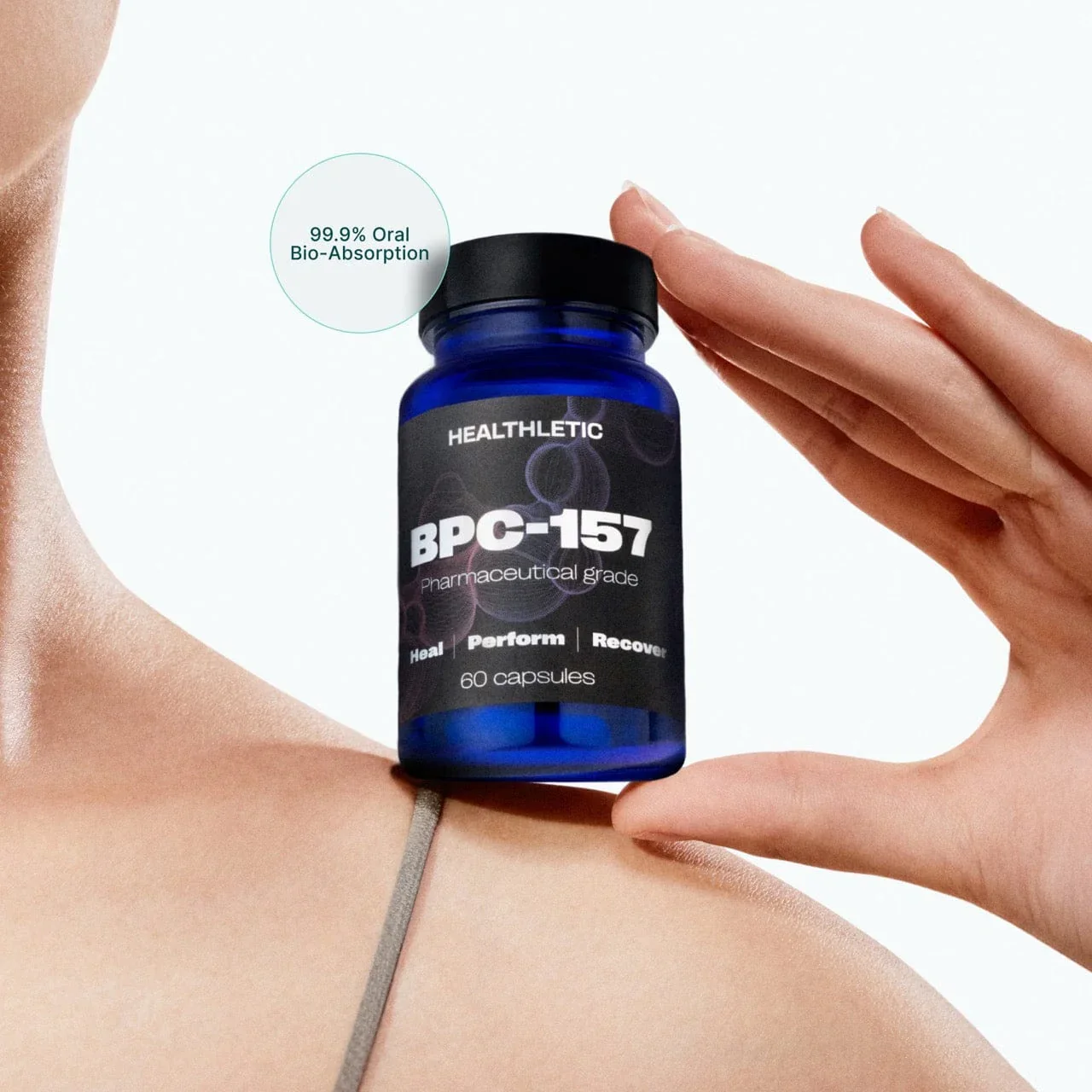
Home › Joint & Tendon Health › Personal Story
Sports-Medicine Doctor: "I Injected 846 Patients With Cortisone. Two Days Before My Own Shot, I Found What Actually Rebuilds a Shoulder."
After 16 years of following the protocol, a torn-up rotator cuff forced him to ask the question his patients had been asking all along: why does the pain always come back?

4.74 · 16,434+ verified customers

By Dr. Michael Reeves - Sports-Medicine Physician, 16 Years ✓
As told to Healthletic · July 2026 · 8 min read
I was scheduled to become Patient 847 on March 12th.
I cancelled my cortisone injection 47 seconds into the phone call.
I'm a sports-medicine doctor. I've done this work for 16 years.
In that time, I've given 846 cortisone injections for chronic shoulder, elbow, and knee pain.
And I was two days away from getting one myself. For the first time - on the receiving end of the needle.
Let me tell you how I got there. Because if your shoulder aches every morning, this is your story too.
Patient 846 Was a 54-Year-Old Contractor
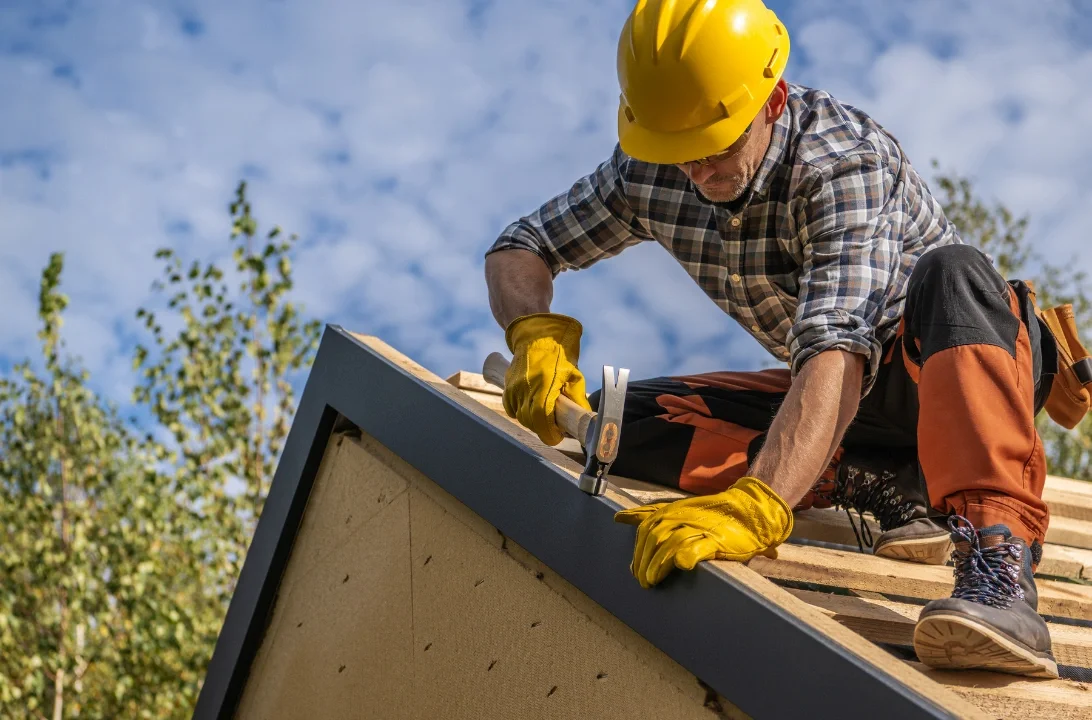
He'd swung a hammer for 30 years. Now he couldn't lift a coffee cup without wincing.
It was his fourth cortisone shot for the same shoulder.
I gave him the injection knowing the numbers:
Fourth injections work only about 20% of the time.
Cortisone weakens tendon tissue a little more with every shot.
There was a 70% chance he'd be back in 6 months - worse than before.
His hands were shaking when he signed the consent form.
"This is my last shot before surgery," he said. Literally.
I wanted to tell him the truth.
But I'm the doctor. I give the injections. I follow the protocol.
Three months later, the protocol came for me.
Then My Own Ultrasound Came Back. Severe Tendinopathy.
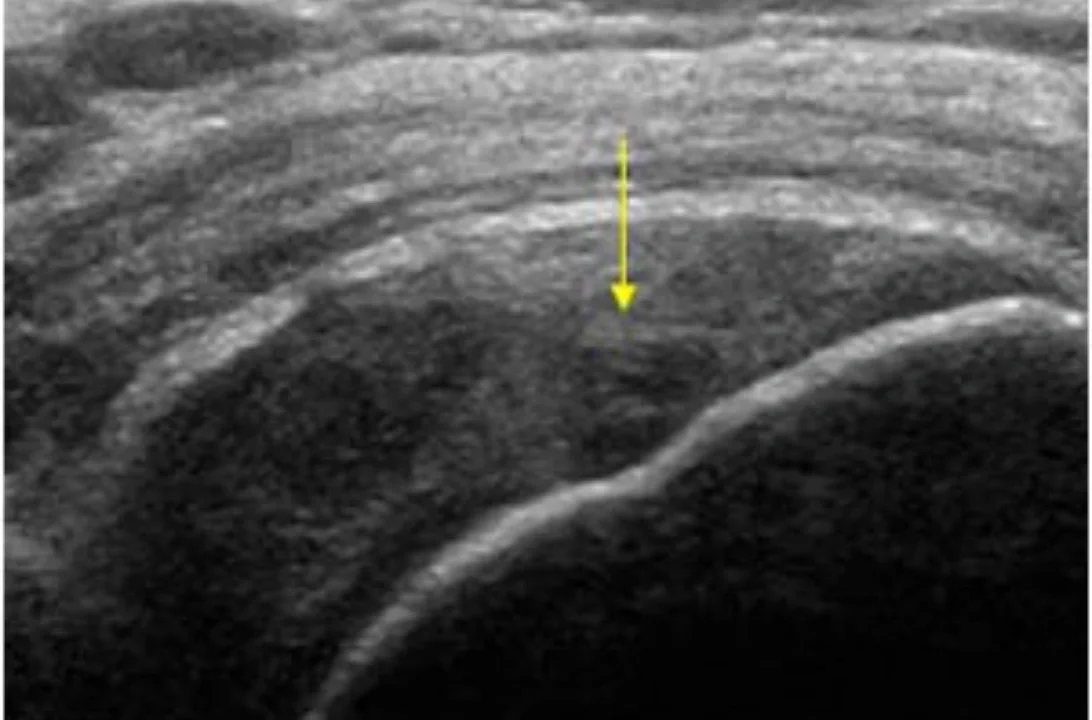
Left rotator cuff. Years of leaning over patients and doing injection work had chewed it up.
My colleague looked at the scan and said the words I'd said 846 times:
"We need to start you on cortisone."
And just like that, I had a patient number. 847.
You probably know what the next part feels like.
I couldn't raise my arm above shoulder height without a stab of pain.
Reaching for the seatbelt made me brace like I was lifting a refrigerator.
By February I was waking up at 3 AM every night because I'd rolled onto my left side.
I'd lie there in the dark thinking about Patient 846.
His fourth injection. His shaking hands. His "last shot."
And one question I couldn't shake: what happened to his first three?
At 3 AM, I Stopped Being a Doctor and Started Being a Patient

One night I gave up on sleep, went downstairs, and opened my laptop.
I wasn't looking for a miracle cure. I don't believe in those.
I was looking for one answer: why do tendons never actually heal with cortisone?
I read tissue-repair studies until the sun came up.
And somewhere around 5 AM, I found the answer.
It made me angry. Because I'd been standing three feet from it for 16 years.
It Wasn't the Pain. It Was the Repair System.
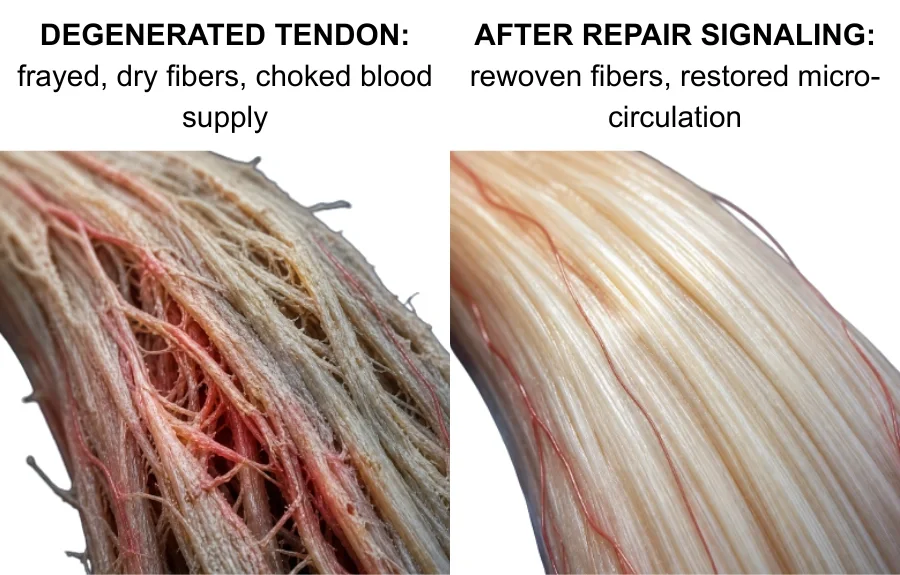
Here's what the research showed - in plain English.
Chronic shoulder and joint pain isn't an inflammation problem.
It's a tissue breakdown problem.
Think of your rotator cuff as a rope. Every day, normal use frays a few strands. And every night, your body's repair crew re-weaves them.
That worked fine at 25. But past 45, the repair crew slows down. Blood flow to the tendon drops. The fraying starts winning.
The rope keeps fraying, strand by strand - for years - before you ever feel the first sharp pain.
So if your shoulder still hurts after everything you've tried, hear this:
It's not your age. It's not that you "slept on it wrong." And it's not in your head.
Your tendon is simply breaking down faster than your body can rebuild it.
Once I understood that, every failed treatment in my career suddenly made sense.
The Three Things Happening Inside My Shoulder - All at Once
1. The fraying never stopped
Old collagen fibers were breaking down every day. At 52, my body was replacing them at half the speed it did at 25. The rope was losing strands faster than it could re-weave them.
2. The tendon was starving
Tendons barely get blood flow to begin with - that's why they heal so slowly. A damaged tendon gets even less. No blood flow means no oxygen, no nutrients, no repair materials arriving at the job site.
3. The repair crew never got the work order
Fibroblasts - the cells that rebuild tendon - sit quietly until they get a signal to start working. In a chronically damaged shoulder, that signal gets weaker and weaker. The crew is there. Nobody calls them in.
Three problems. One root cause. And not a single treatment I'd prescribed in 16 years touched any of them.
What Didn't Work - And Why
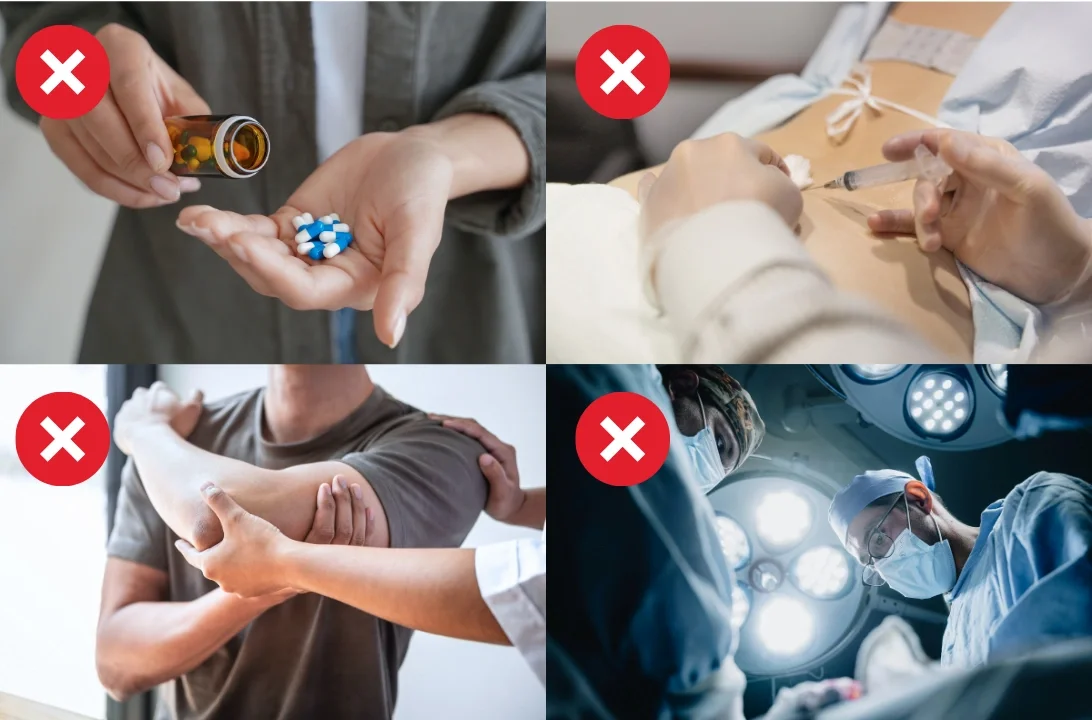
Painkillers. They block the pain signal for a few hours. That's it. Worse - studies show long-term NSAID use actually slows collagen repair. You feel better while the rope frays faster.
Cortisone. This one hurt to learn. Cortisone is spray paint over rust. It kills the inflammation - and with it, the repair signal. Each shot leaves the tendon structurally weaker. That's why shot four works 20% of the time, not 90%.
Physical therapy. Genuinely useful - I still prescribe it. But PT strengthens the muscle around the tendon. It cannot re-weave collagen that's already gone.
Surgery. It repairs the tear. It does nothing about the breakdown that caused the tear. About 40% of rotator cuff patients still have pain after surgery. Same rope, new knot.
Every tool in my kit managed pain. Not one of them rebuilt tissue.
So the real question became: what turns the repair system back on?
I Spent Three Weeks Trying to Answer That. And Kept Failing.
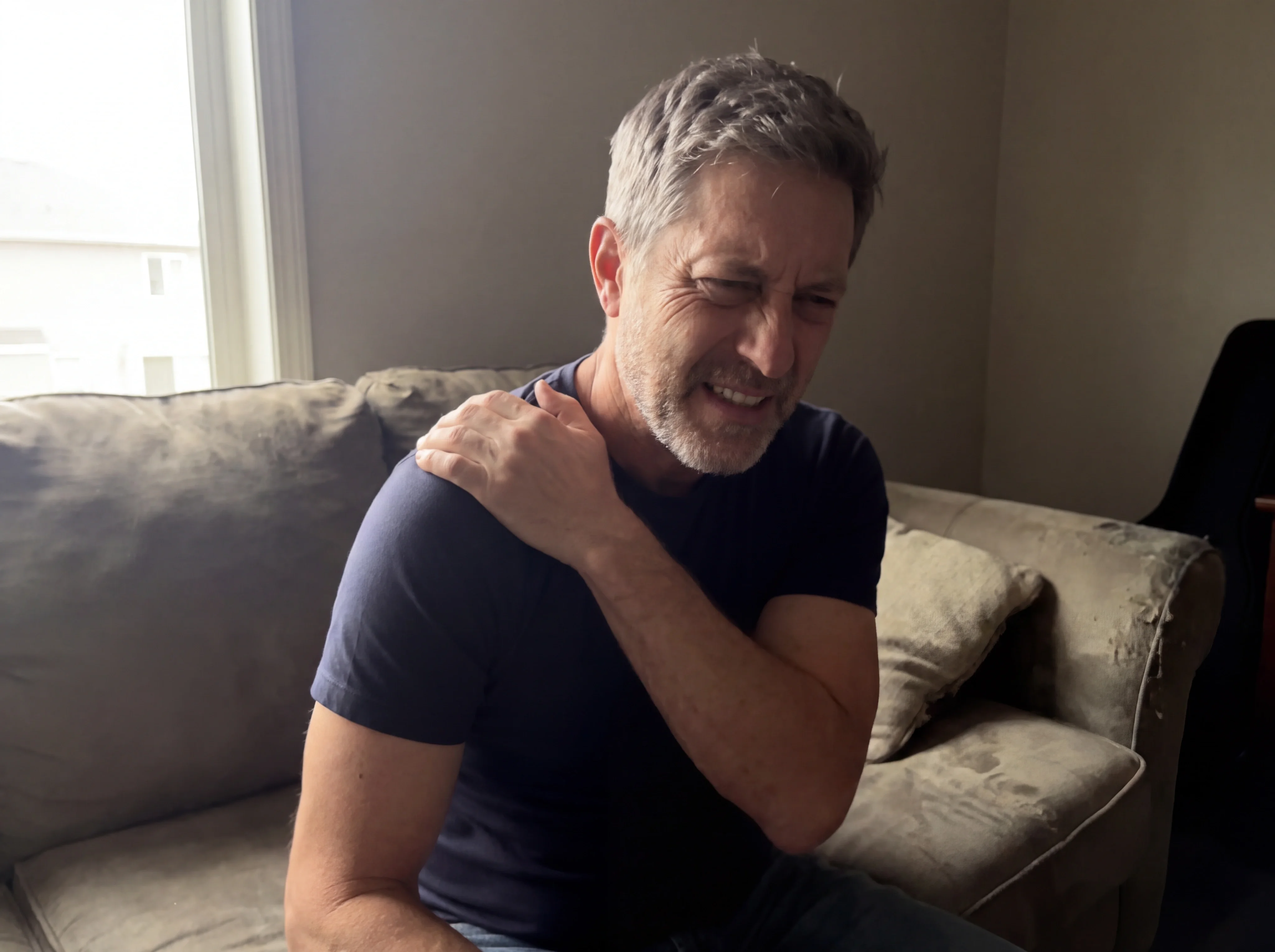
Knowing the cause is not the same as fixing it. I learned that the hard way.
First I tried the textbook route: collagen peptides with vitamin C, every morning. Two weeks. My shoulder didn't notice.
Then a $400 red-light therapy device my wife found. The research looked interesting. My results didn't exist.
Then eccentric loading - the slow, heavy tendon exercises I prescribe my own patients. It helped. Maybe 15%. Then it plateaued, the way it plateaus for most of my patients.
I even priced out PRP injections. $2,400, not covered by insurance, and the evidence is honestly mixed. I couldn't recommend it to a patient with a straight face. So I couldn't sell it to myself either.
Three weeks in, I sat in my car in the hospital parking lot and admitted it:
"Maybe my colleague was right. Maybe cortisone is the only realistic option."
That afternoon, I re-booked the injection. March 12th. Patient 847.
Then an Old Colleague Said One Sentence That Changed Everything
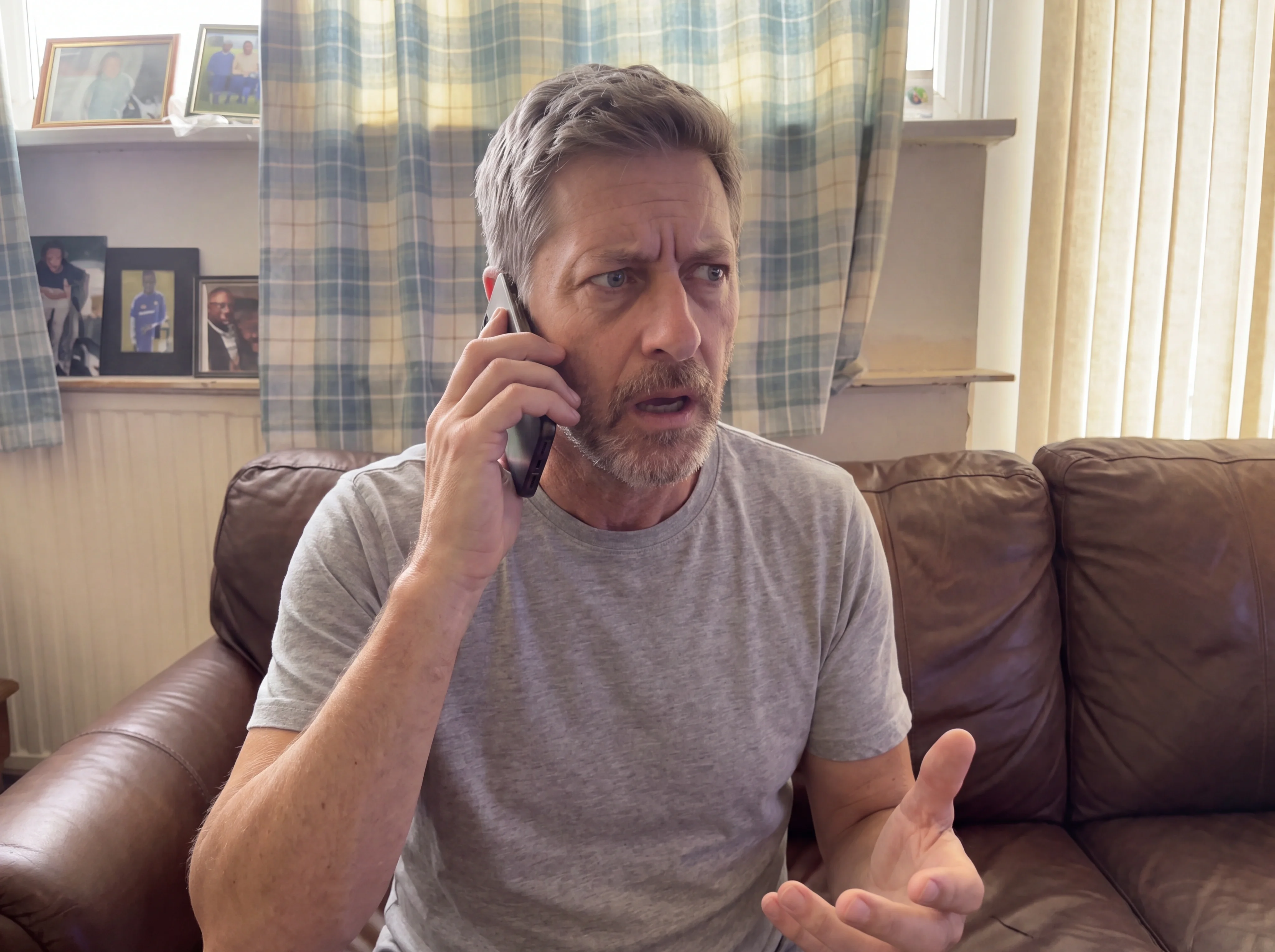
A week later I was on the phone with a doctor I did my fellowship with. He works in regenerative sports medicine now - the field that treats pro athletes.
We were discussing a shared patient. At the end of the call, I mentioned my shoulder. And the injection.
He went quiet for a second. Then:
"Before you take the shot - have you looked at the peptide research?"
I almost laughed. Peptides. Gym-bro internet stuff, I thought. Locker-room science.
"Humor me," he said. "I'll send you three studies. Published ones. Read them and call me back."
I opened them that night - fully intending to debunk them and move on.
I couldn't.
The Peptide Buried in 30 Years of Research
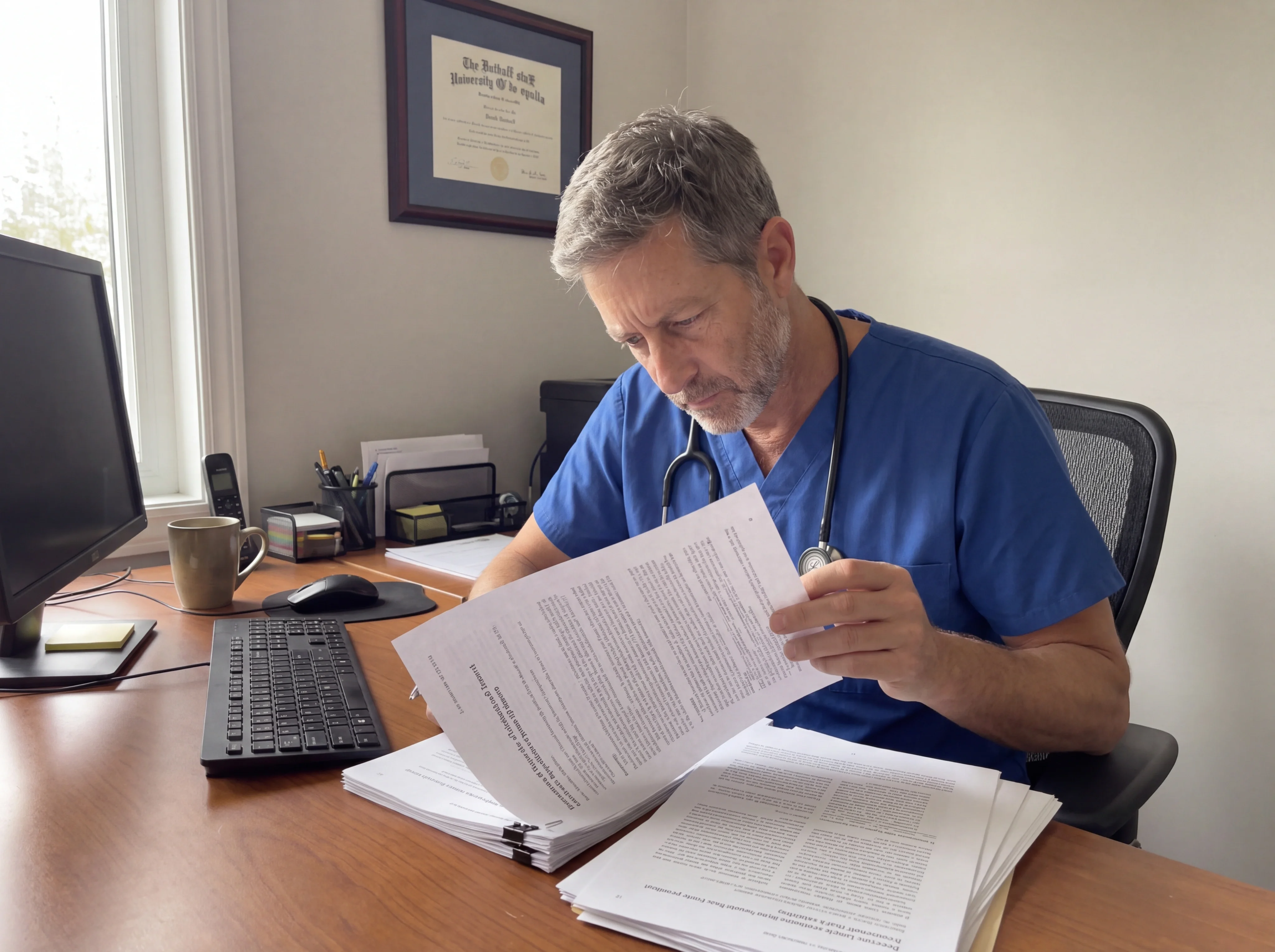
The compound in those studies was BPC-157.
Body Protection Compound. A chain of 15 amino acids your own gut already produces.
It wasn't new. It wasn't fringe. Researchers have been publishing on it for over three decades - I'd just never had a reason to look. Here's what the studies kept showing, over and over:
→ It signals fibroblasts - the repair crew - to start rebuilding collagen.
→ It promotes new blood vessel growth, so oxygen finally reaches the starved tendon.
→ It speeds tendon and ligament healing in study after study.
→ It calms inflammation at the source - without shutting down repair like NSAIDs do.
I sat back in my chair.
This wasn't pain management. This was tissue regeneration.
I called my colleague back the next day with a page of questions. Why isn't this standard of care? ("Peptides can't be patented - nobody funds the big trials.") What do the athletes use? How do you dose it?
Patient 846 never needed a fourth cortisone shot. He needed his tendon to actually heal.
I started looking for a BPC-157 product that same week.
And I almost made a catastrophic mistake.
The Mistake That Makes Most BPC-157 Worthless
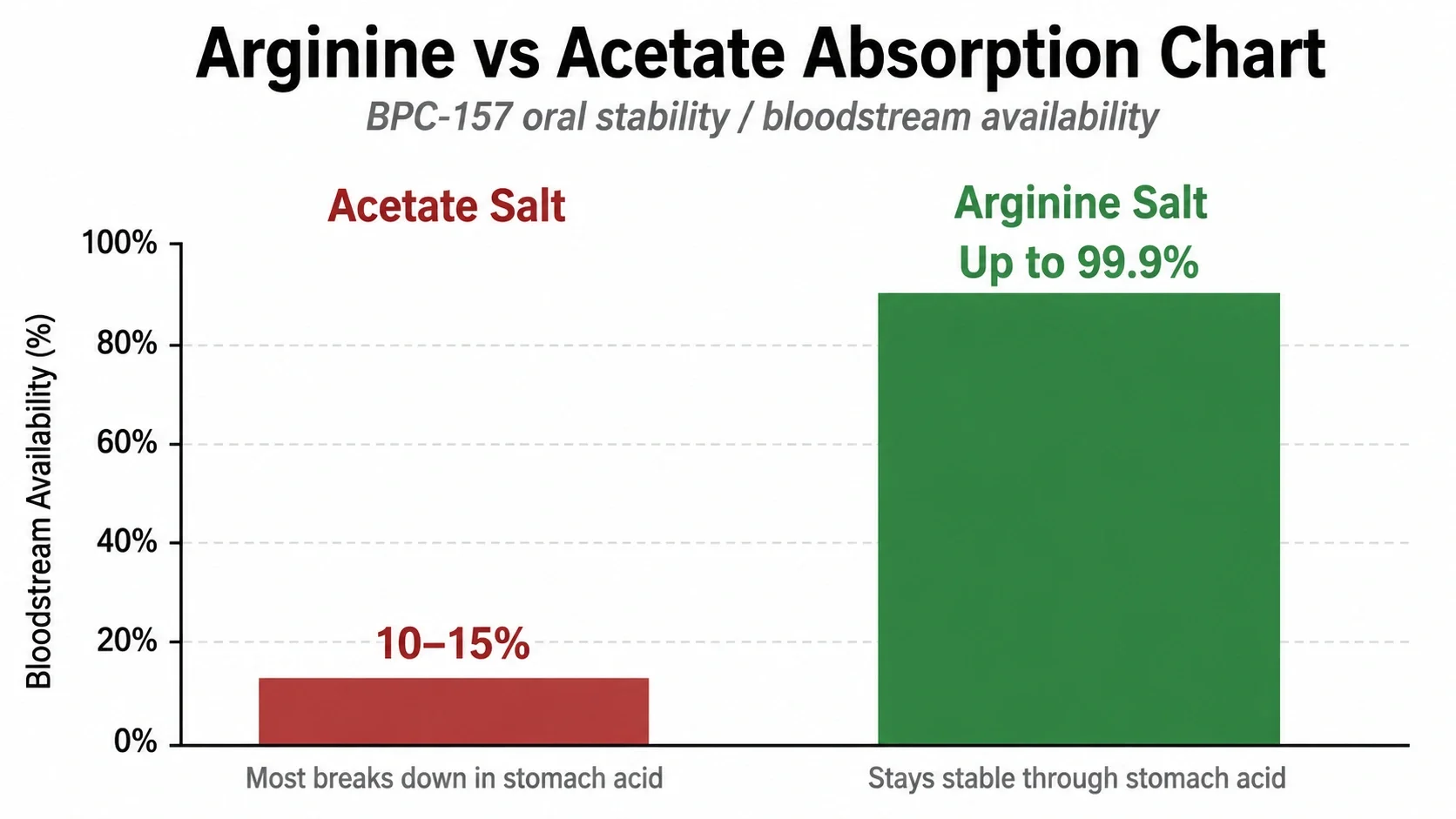
Here's what almost nobody tells you.
Most BPC-157 supplements on the market use something called acetate salt.
Sounds technical. Here's all that matters:
Acetate salt BPC-157 barely survives your stomach.
Stomach acid tears most of it apart before it ever reaches your blood. Maybe 10–15% gets through on a good day.
You swallow the capsule. Your wallet gets lighter. Your shoulder never sees the peptide.
As a doctor, this is the part that makes me grind my teeth - because the label looks identical.
Then I found the other form: arginine salt.
Arginine salt was engineered for one job: surviving your stomach.
It stays intact through stomach acid.
It reaches your bloodstream - up to 99.9% bioavailable in stability testing.
It actually arrives at the damaged tissue that needs it.
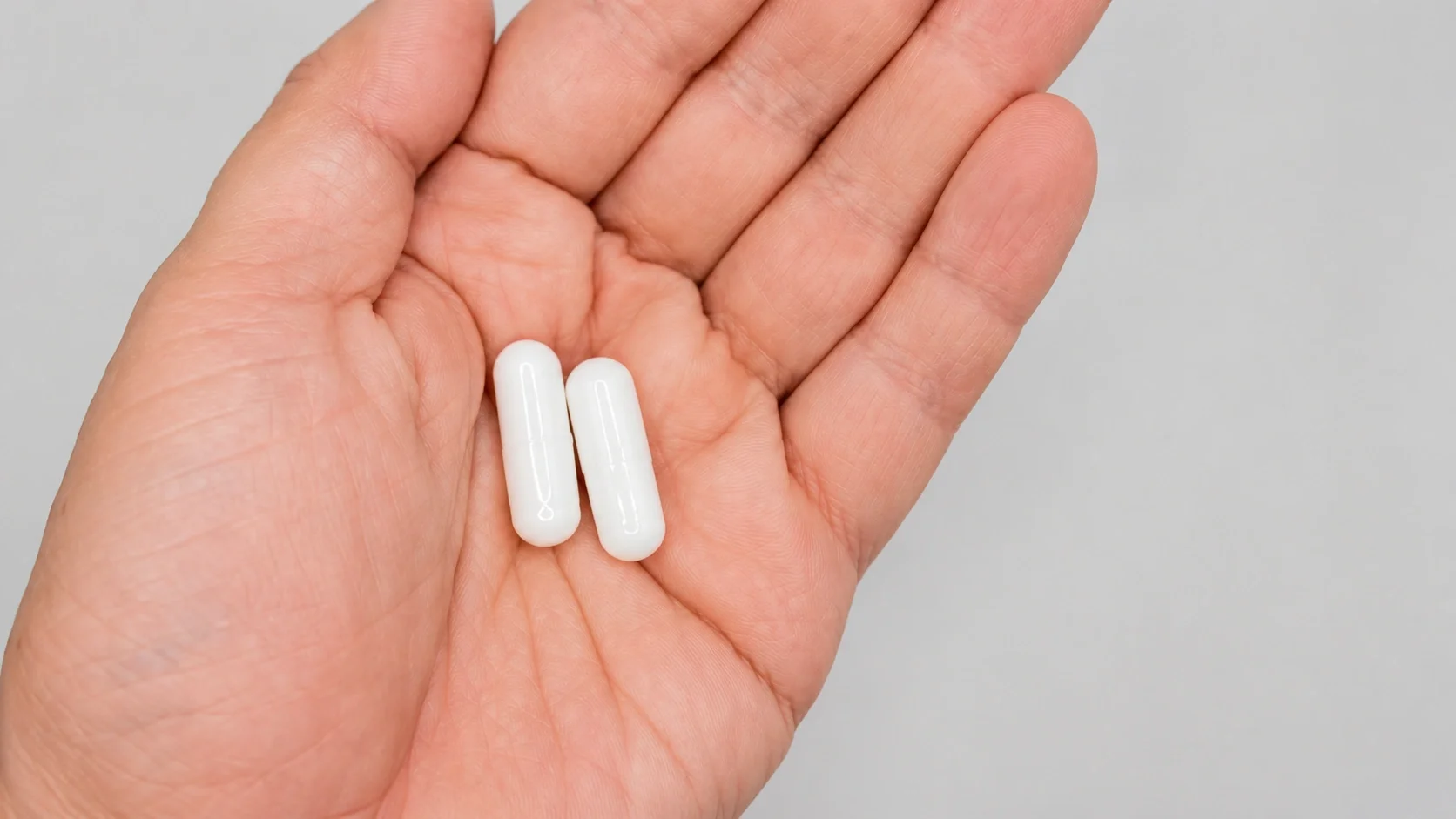
Two identical-looking capsules. One heals. One flushes away.
The difference is the salt form. Check the label before you buy anything.
"But Don't You Have to Inject It?"
That's what I thought too. For years, BPC-157 was an injection-only compound in research circles.
And let's be honest - most men I treat would rather live with the pain than push a needle into their own shoulder every morning.
Daily needles. Sterile handling. Refrigeration. Guessing the dose from a vial.
That was the old way.
The arginine salt form changed the math. Once the peptide can survive your stomach, you don't need the needle at all.
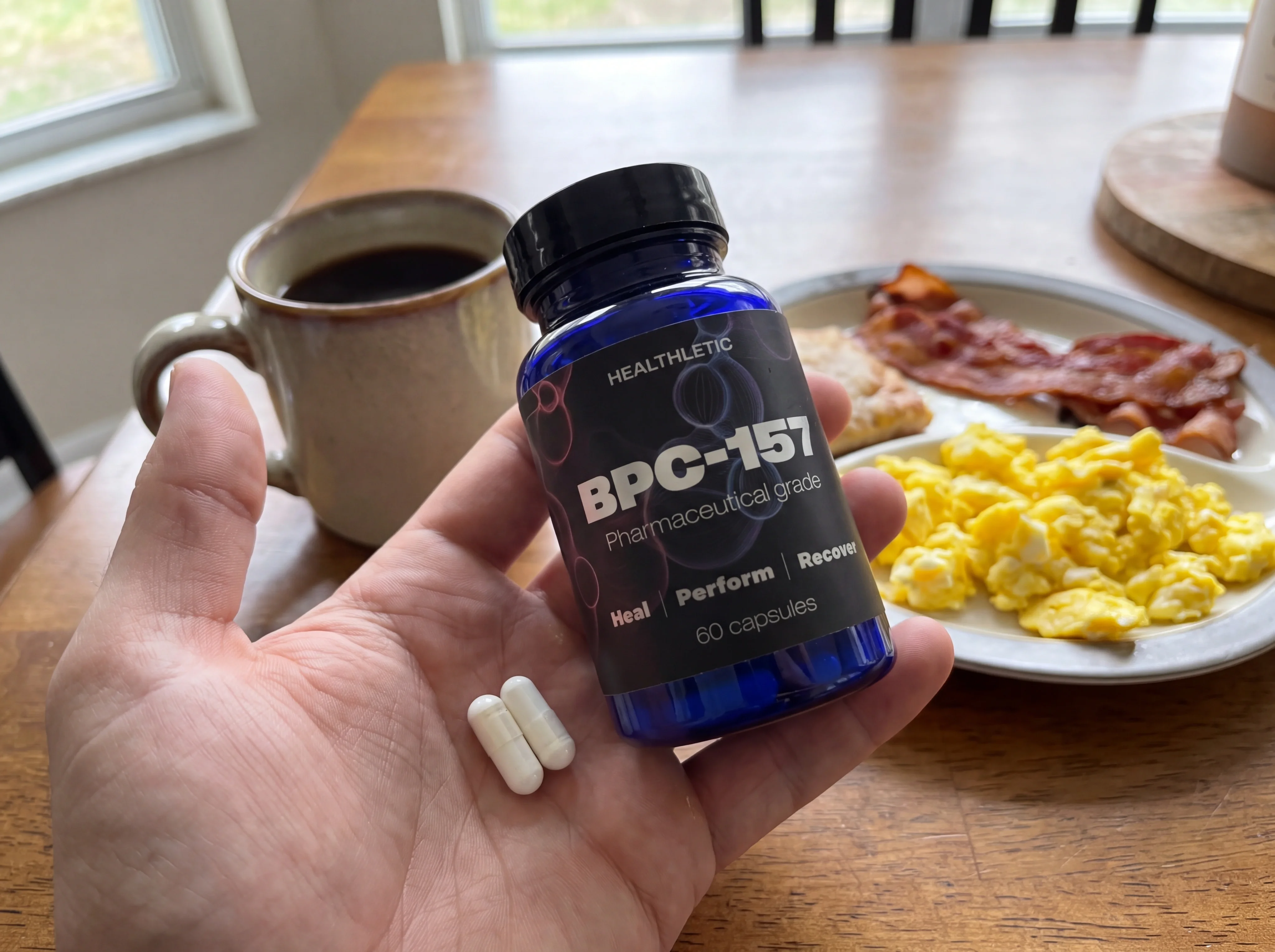
Two capsules with your morning coffee. Full 500 mcg clinical dose. Done in five seconds.
No needles. No prescription. No refrigeration. Nothing to measure, sterilize, or explain to your wife.
I Checked the Lab Reports Before I Ordered
I'm a physician. I don't take mystery powder from the internet, and neither should you.
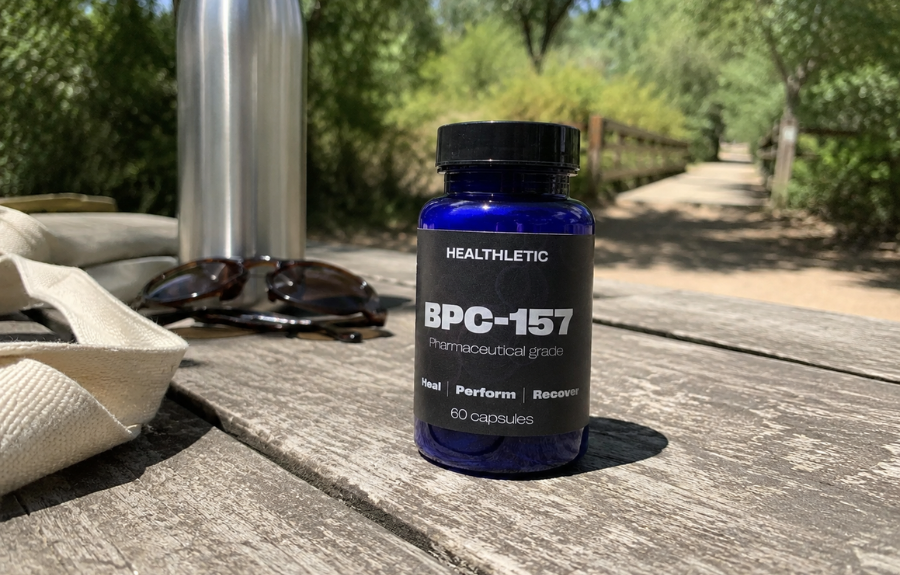
I found one company doing this the way I'd want it done: Healthletic.
Pharmaceutical-grade arginine salt BPC-157 - the form that survives digestion.
Single ingredient. No proprietary blends hiding the dose.
Third-party HPLC lab testing, with a Certificate of Analysis published for every batch.
Made in an FDA-registered US facility.
I could verify the purity of the exact batch in my bottle. That's the standard my hospital pharmacy uses.
I ordered it that morning.
What Happened Over the Next 6 Weeks
Week 1
The constant background ache dropped - I'd guess by a third. Honestly, I assumed it was placebo. I've seen placebo do impressive things. I kept notes anyway.
Week 2
I slept through the night on my left side for the first time in months. That one got my attention. Placebo doesn't usually survive week two.
Week 3
I lifted my arm overhead getting a case of water off the top shelf - and realized halfway up that I hadn't braced for pain. Range of motion was coming back.
Week 6
Full function. No pain reaching, lifting, sleeping. I was doing shoulder presses in my garage again - light, but pain-free.
Feelings aren't proof. So I did what I'd tell any patient to do:
I ordered a follow-up ultrasound on myself.
March 10th: The New Ultrasound
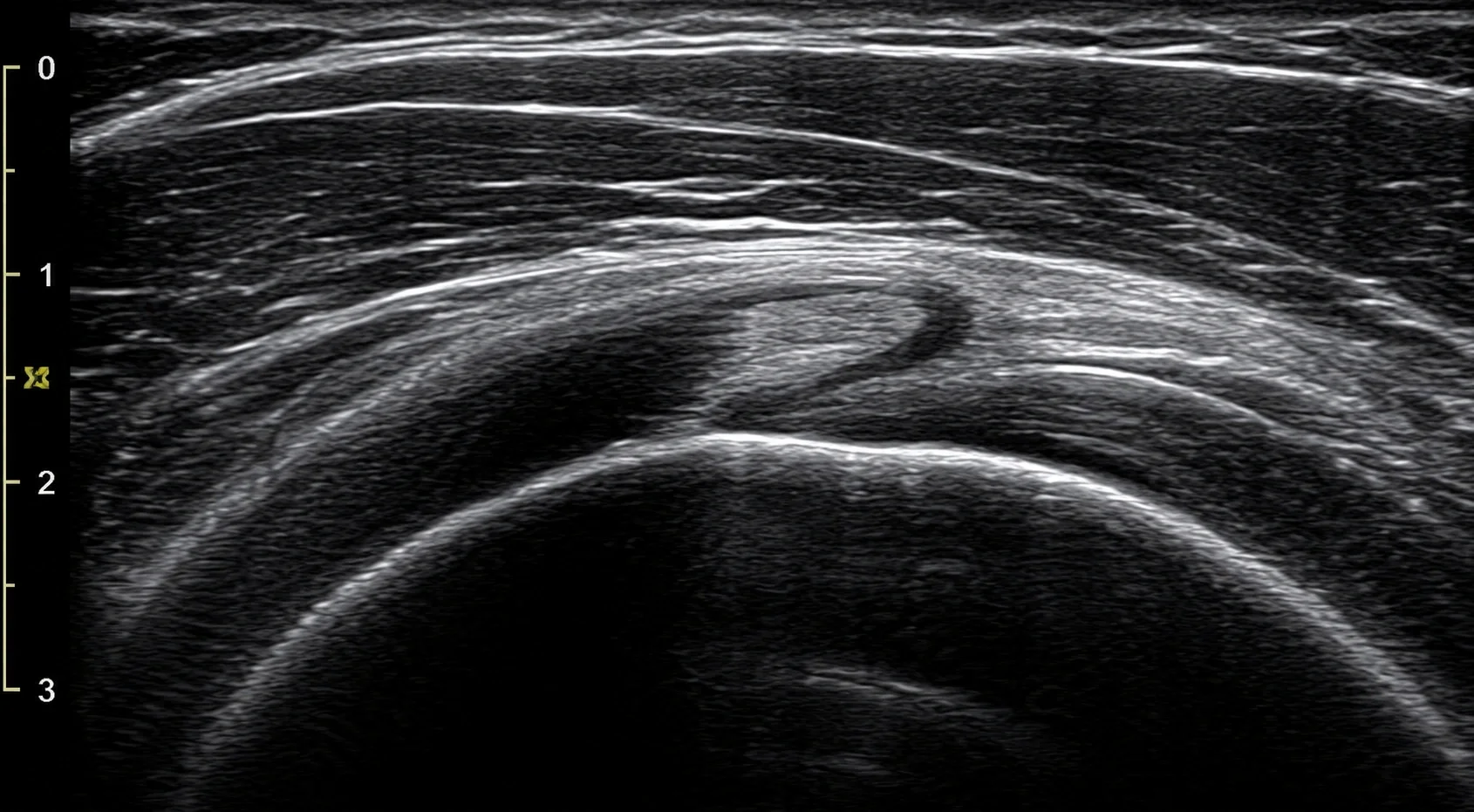
My colleague pulled up the images. Then he pulled up January's scan next to them.
Visible tissue repair. Reduced inflammation. Healthier collagen structure where the fraying had been.
He looked at the screens twice. Then at me.
"What did you do?"
I told him everything. The tissue-breakdown mechanism. The cortisone trap. The arginine salt absorption difference.
He was quiet for a moment. Then:
"Well. You don't need the injection."
The next afternoon, I called the scheduler.
"Hi, this is Dr. Reeves. I need to cancel my cortisone injection on March 12th."
"Cancel? Doctor, that's tomorrow. Are you sure?"
"I'm sure."
47 seconds. That's how long it took to not become Patient 847.
That Was 9 Months Ago
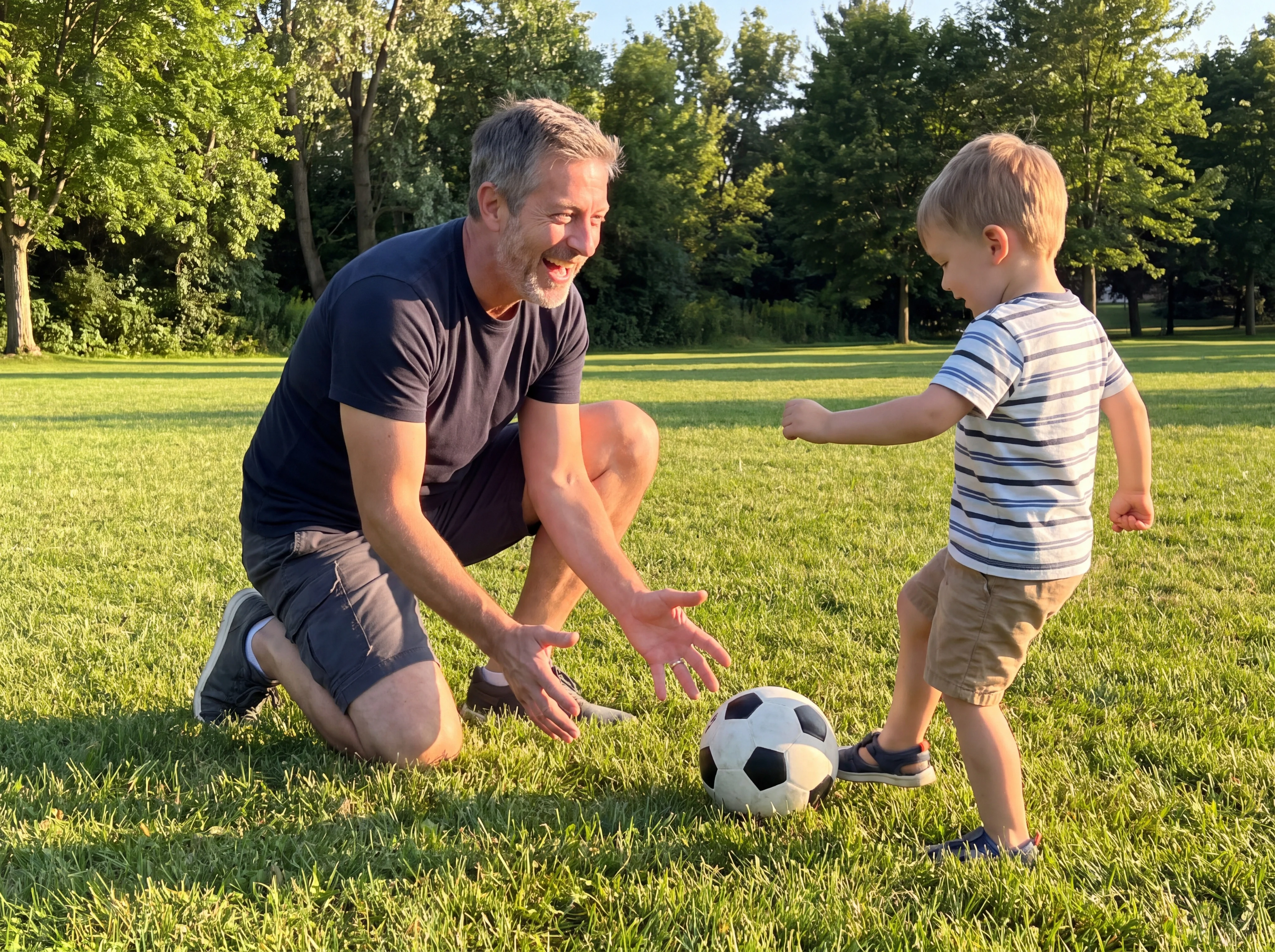
I'm pain-free. Full surgical schedule. Golf on Saturdays. I can throw a ball with my grandson without paying for it that night.
I take two capsules every morning. So do many of my patients now.
The ones headed for their fourth cortisone shot. Their second surgery. Their endless cycle of temporary fixes.
Last month, a 58-year-old golfer sat in my office. Chronic shoulder pain, four previous injections. His hands were shaking when we discussed the fifth.
"My brother had this," he said. "Seven shots. He's worse now than when he started."
This time, I didn't follow the protocol.
I told him everything. He never became a patient number.
Here's What's Really Happening in Your Shoulder
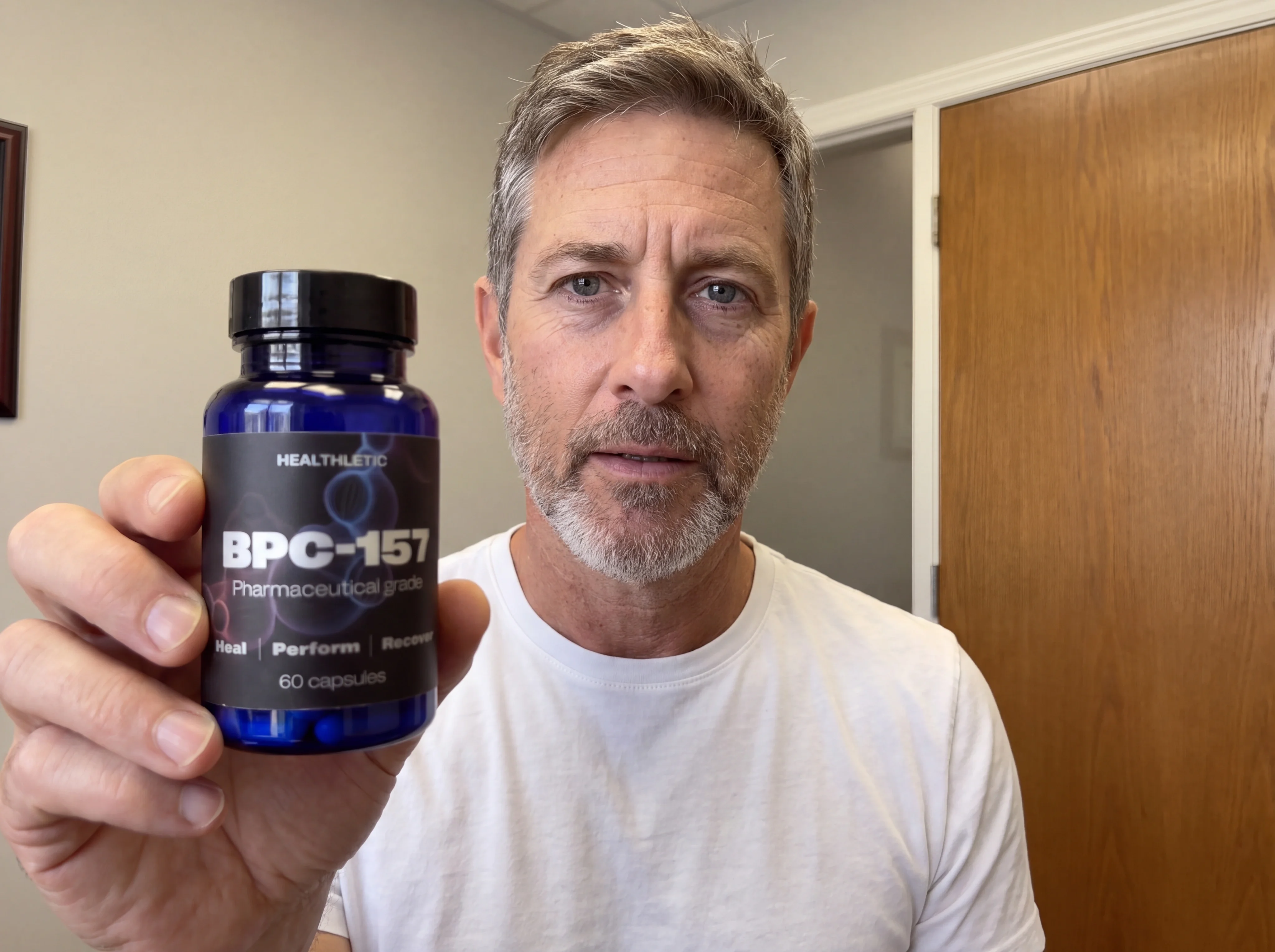
If you've read this far, let me talk to you the way I'd talk to a patient.
Your chronic pain isn't just inflammation. It's tissue breaking down faster than your body can rebuild it.
Painkillers mask it. Cortisone masks it and weakens the tendon. Surgery repairs the tear but not the breakdown.
Nothing changes until the repair system turns back on.
That's the one thing BPC-157 is built to do - but only if it reaches your bloodstream.
Which means only the arginine salt form, tested and verified batch by batch.
Here's Exactly What Happens When You Order
Today
You pick your supply below. Order confirmation lands in your email within minutes.
This week
Your bottles ship from the US facility with tracking. No "peptide source" websites, no customs roulette.
When it arrives
Two capsules with breakfast. That's the whole routine. It works alongside anything your doctor has you on - and don't stop anything he prescribed.
Week 2
Check your sleep and your morning stiffness first. That's where most people notice the first shift.
Week 6–8
This is tissue rebuild, not a painkiller - collagen work takes weeks, not days. Judge it at week 6, not day 3.
Either It Works, or You Pay Nothing
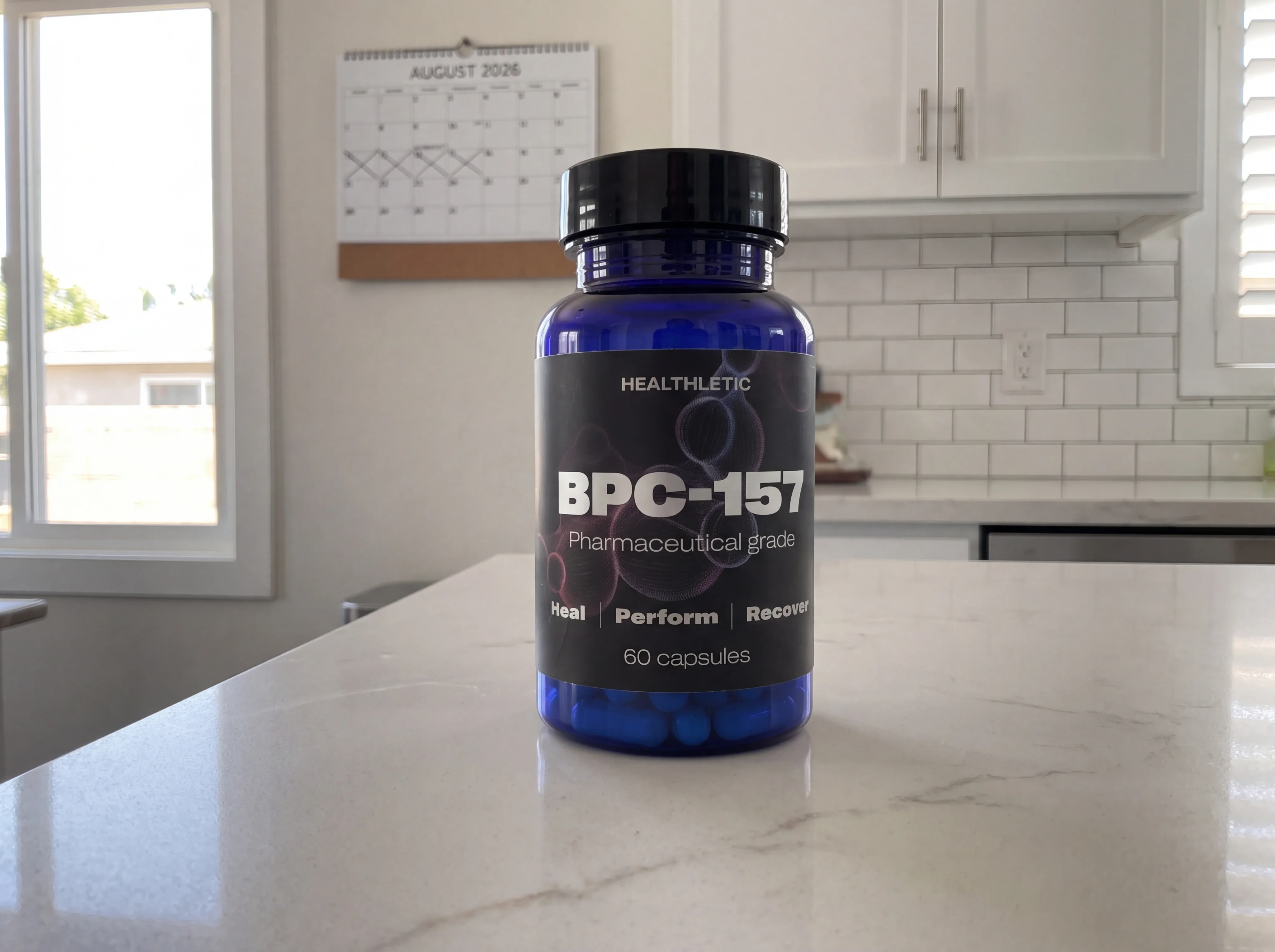
30 days. Full refund. No questions, no return-shipping games.
If you don't feel a difference - day 10, day 20, day 29 - email them and you get your money back.
You've been burned by enough bottles that did nothing. That's exactly why the guarantee exists.
The worst case is you're back where you started. The best case is you cancel an injection of your own.
What Customers Are Telling Us
Verified reviews from the Healthletic product page · 4.74 average · 16,434+ customers
"I have had a shoulder rotator cuff issue and going through physical therapy for quite some time with decent results. When I started taking BPC-157, I noticed more feeling and lower inflammation within a month."
Johnny R. · Rotator cuff · Verified buyer

"My wife bought this for my golfer's elbow that I've been complaining about for the last 5 years. I thought it was snake oil. A month later, I played 18 holes and had almost no pain during or after."
John H. · Golfer's elbow · 5 years · Verified buyer
"I'm in my 50s, but I recover from workouts like I'm in my 20s again. Three weeks in and the lower-back stiffness after deadlifting is gone. Two months in, I'm sleeping deeper than I have in years."
Gregory P. · Recovery · 50s · Verified buyer

You Have Two Choices Right Now
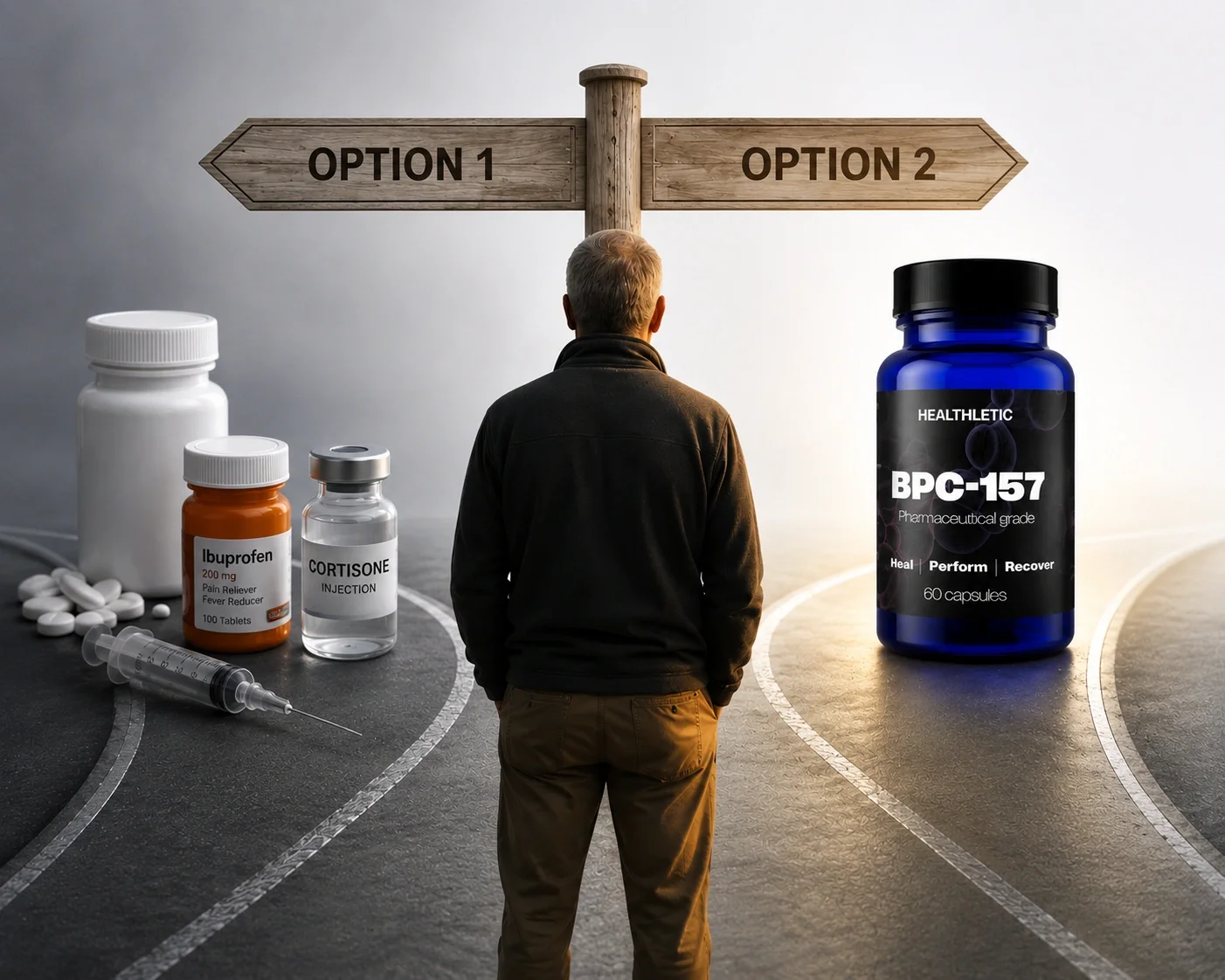
You can keep doing what you've been doing. Another bottle of ibuprofen. Another cortisone appointment. Another year of sleeping on one side while the rope keeps fraying.
Or you can spend 6 weeks giving your body the one thing it's been missing - the repair signal.
I'm not selling you hype. I'm telling you what kept me off the injection table.
Try it for 6–8 weeks. If it doesn't work, you can still get the shot. The surgery. All of it will still be there.
But if it does work... you just saved yourself from becoming the next patient number.
The men who fix things don't wait for the rope to snap. They re-weave it while they still can.
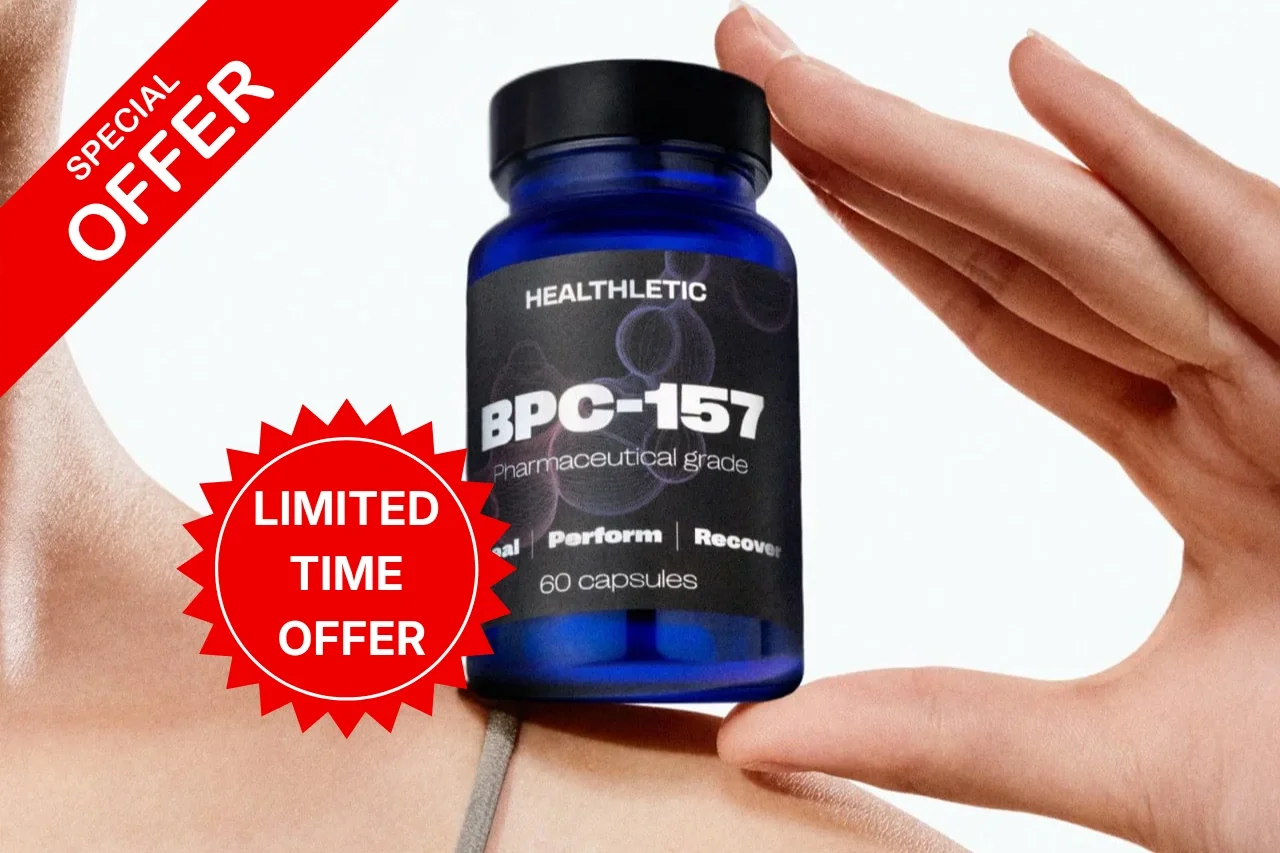
Update: August 2026 - UP TO 46% off applies from this page only
Healthletic BPC-157 · Arginine Salt
Full 500 mcg clinical dose · 2 capsules a day · COA published every batch

30-day money-back guarantee
Ships from the USA

30-Day Money-Back Guarantee

Fast Shipping From The USA

Guaranteed Safe & Secure Checkout

Easy No-Hassle Returns
You can keep doing what you've been doing. Another bottle of ibuprofen. Another cortisone appointment. Another year of sleeping on one side while the rope keeps fraying.
Or you can spend 6 weeks giving your body the one thing it's been missing - the repair signal.
I'm not selling you hype. I'm telling you what kept me off the injection table.
Try it for 6–8 weeks. If it doesn't work, you can still get the shot. The surgery. All of it will still be there.
But if it does work... you just saved yourself from becoming the next patient number.
The men who fix things don't wait for the rope to snap. They re-weave it while they still can.
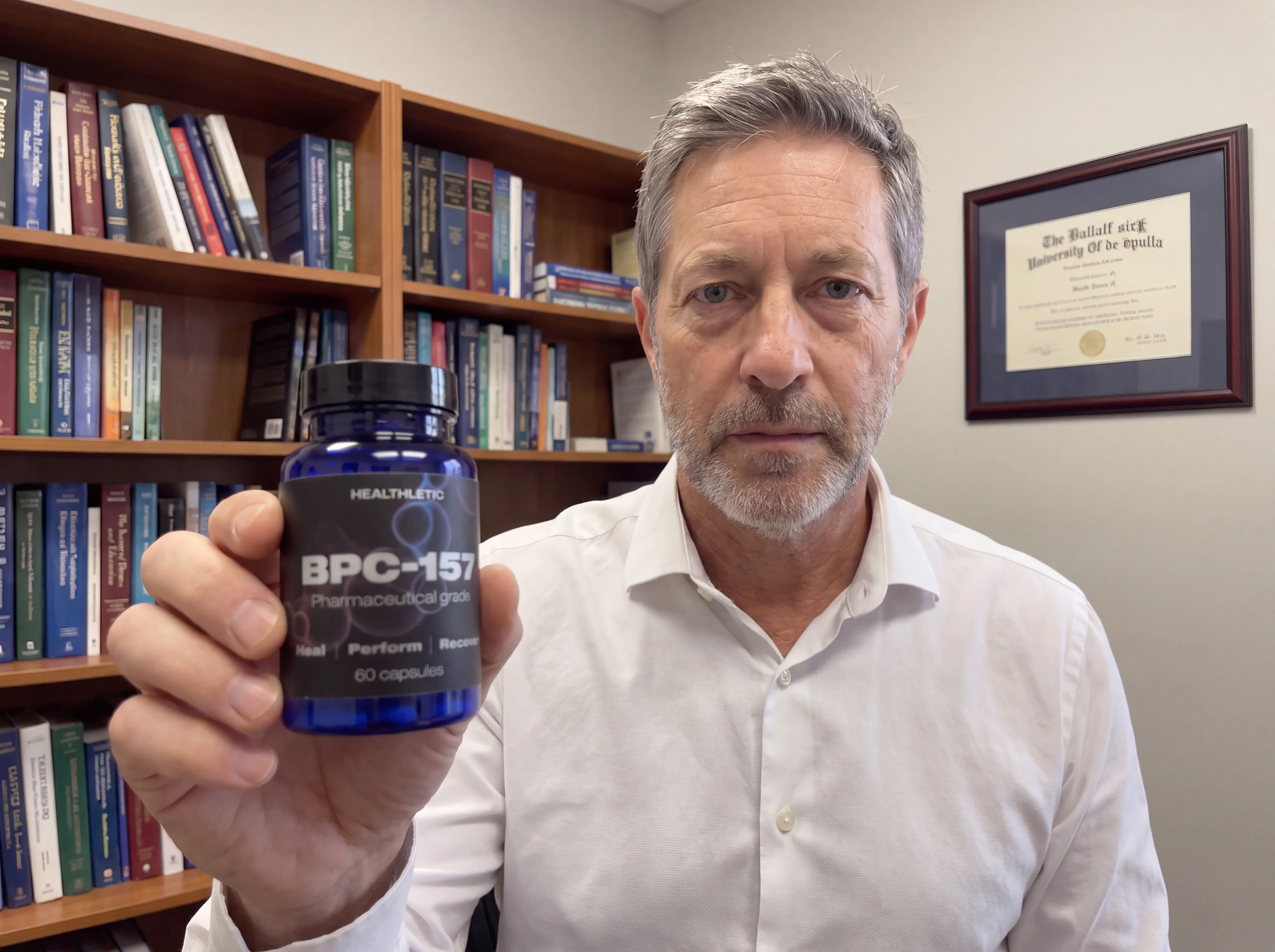
Dr. Michael Reeves is a placeholder identity - final authority figure, credentials, and photography to be supplied by the Healthletic team. Story adapted from Healthletic's long-form creative. This page is an advertisement for Healthletic BPC-157.
These statements have not been evaluated by the Food and Drug Administration. This product is not intended to diagnose, treat, cure, or prevent any disease. Individual results vary. Consult your physician before starting any supplement, especially if you take prescription medications. Do not discontinue prescribed treatment without medical advice.
© 2026 Healthletic. All rights reserved.